
What is food literacy and why does it matter?
Food literacy brings together the skills, knowledge and behaviours that help people plan, manage, select, prepare, and enjoy food in ways that meet their needs. It includes the practical, everyday skills that support people to engage with food and nutrition.
The Australian Curriculum recognises the importance of food and nutrition education, highlighting the need for students to understand nutrition principles, value of a variety of foods and food preparation skills to support informed decision-making and lifelong wellbeing.1
Food literacy is about more than nutrition knowledge. It empowers students with food confidence, curiosity and practical skills that extend beyond the classroom.
Schools are well placed to support food literacy
Schools are well placed and recognised as important settings for supporting students to develop knowledge, skills and behaviours around healthy eating.
Teachers play a valuable role in creating positive learning experiences around food. As trusted role models, teachers have the unique opportunity to promote healthy eating habits through both their actions and the learning experiences they provide.
Embedding food and nutrition education across the curriculum supports a whole-school approach to health and wellbeing, creating consistent opportunities for students to build their knowledge and practical skills.
Recognising teacher’s needs
While teachers recognise the value of food and nutrition education, finding high-quality resources that are easy to access and implement can be challenging.2
Research shows that teachers value resources that are:
- Aligned with curriculum outcomes
- Easy to adapt and use
- Age-appropriate
- Interactive and engaging
- Available in one convenient location
How freshSNAP can help
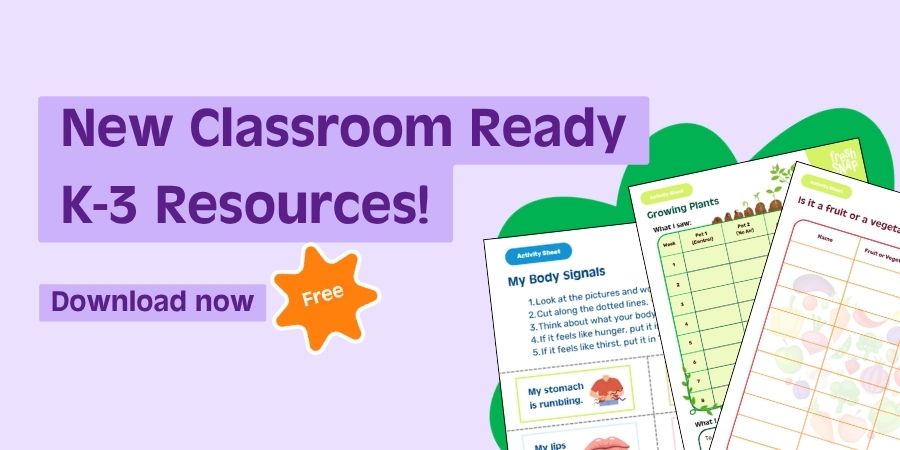
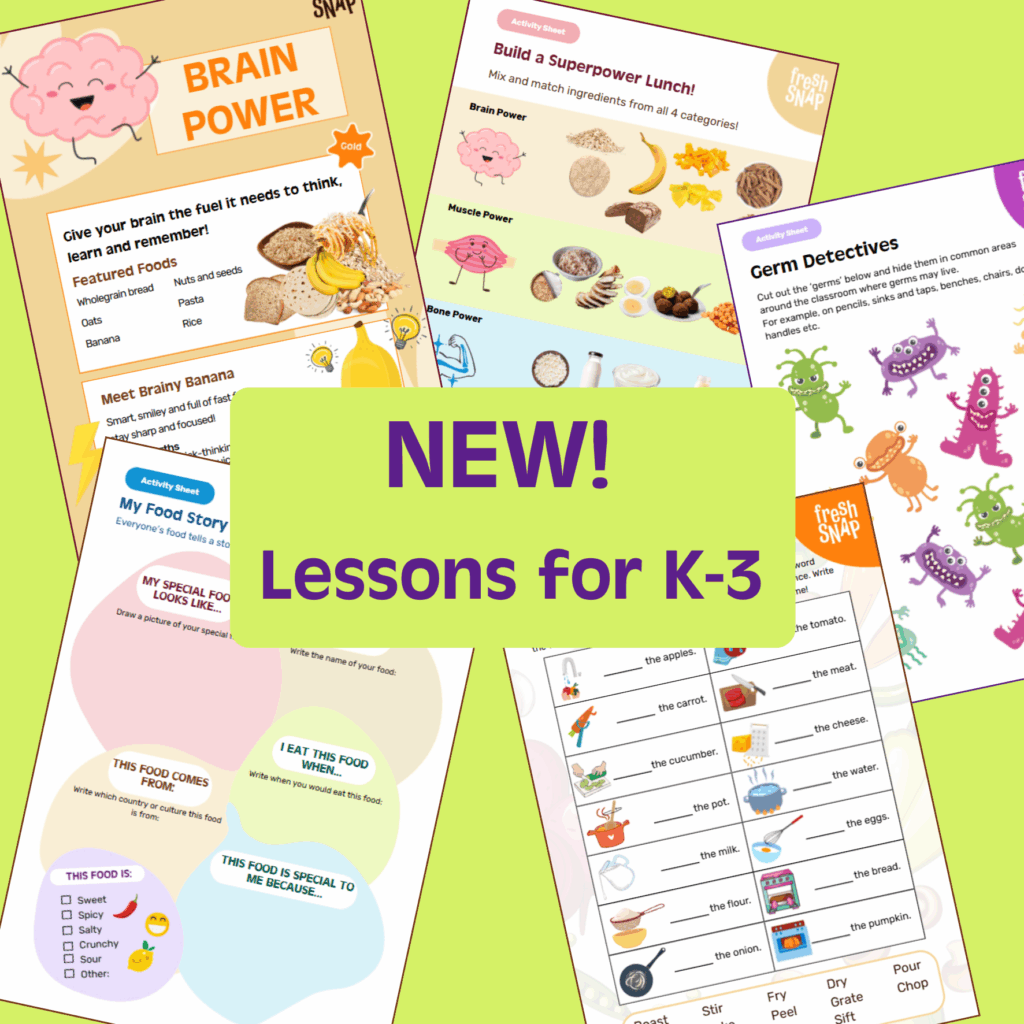
freshSNAP supports teachers to bring food and nutrition learning to life through free curriculum-aligned resources and professional learning opportunities.
Designed for busy teachers, freshSNAP resources are evidence-based, engaging and seamlessly integrate into classroom lessons with minimal preparation.
Our resources help schools create positive nutrition learning experiences while supporting students to develop practical food literacy skills.
Book a FREE freshSNAP professional learning session!
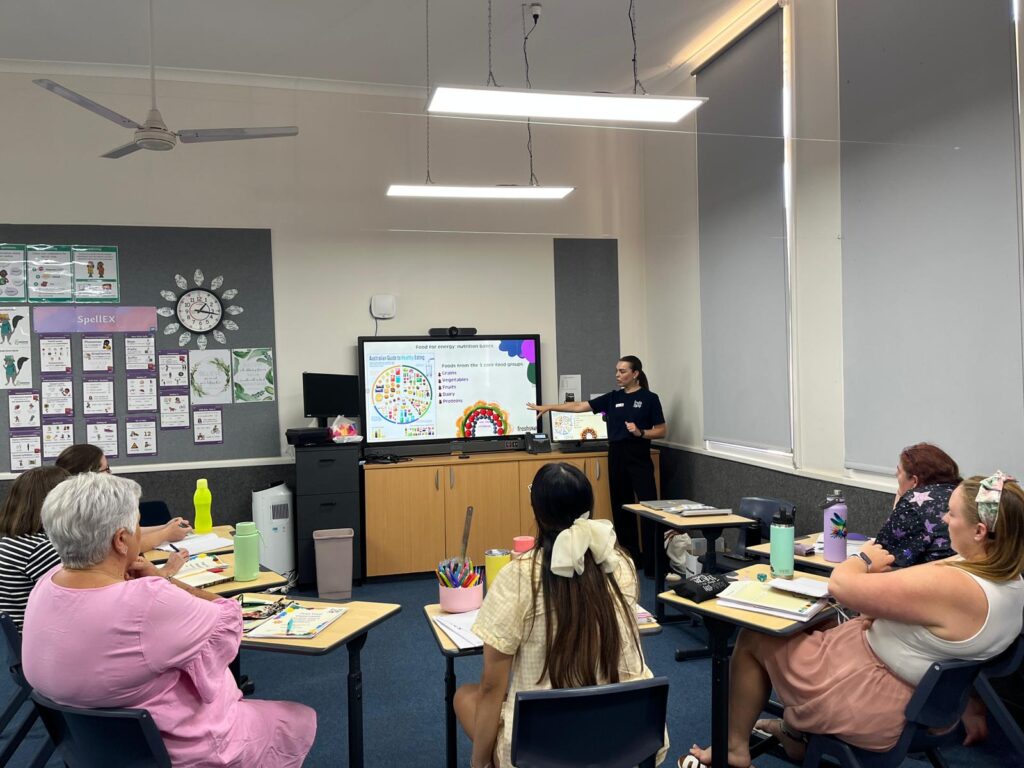
Building confidence in food and nutrition education doesn’t have to happen alone. That’s why freshSNAP offers FREE professional learning (PL) opportunities to support teachers and educators build the knowledge, skills and confidence to deliver engaging food literacy learning in their school settings.
Our friendly team can visit your school to deliver practical, engaging staff PL tailored to your needs. Sessions align with the following AITSL Standards:
2.1 Content and teaching strategies of the teaching area
Apply knowledge of the content and teaching strategies of the teaching area to develop engaging teaching activities.
6.2 Engage in professional learning and improve practice
Participate in learning to update knowledge and practice, targeted to professional needs and school and/or system priorities.
7.2 Comply with legislative, administrative and organisational requirements
Understand the implications of and comply with relevant legislative, administrative, organisational and professional requirements, policies and processes.
Ready to support food literacy at your school?
Register your interest here to book a FREE freshSNAP PL session in 2027.
References
- Australian Curriculum. Understand this curriculum connection – food and wellbeing. Australian Curriculum. Accessed October 16, 2026. https://www.australiancurriculum.edu.au/curriculum-information/understand-this-curriculum-connection/food-and-wellbeing
- Love P, Booth A, Margerison C, Nowson C, Grimes C. Food and nutrition education opportunities within Australian primary schools. Health Promot Int. 2020;35(6):1291-1301. doi:1093/heapro/daz132